Missing foil, cap detection and reject handling for induction sealing
Inspection devices can protect an induction sealing line, but they must be scoped around the fault they detect and the action the line must take.
Detection and rejection need a defined fault-response plan.
A missing-foil sensor, cap check or reject device can reduce the risk of unsealed packs continuing down the line, but it does not prove seal strength by itself. Each device should have one clear job: detect a missing liner, high or crooked cap, stalled pack, backlog condition or rejected container. The line must then decide whether to stop, reject, alarm, count or quarantine affected packs.
For Lancing projects, define the inspection point before quotation. A late decision can change conveyor length, controls, reject location, guarding, collection and FAT/SAT acceptance tests.
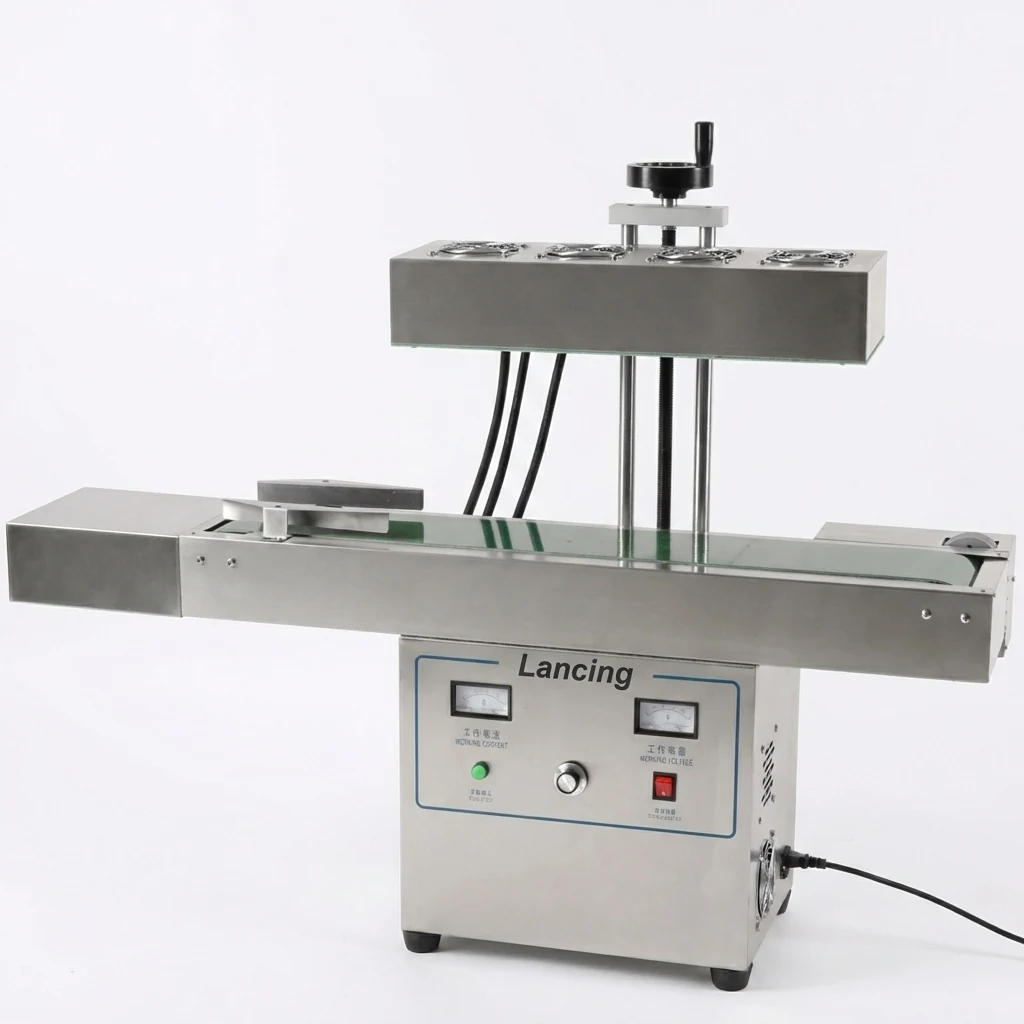
Separate detection from proof of seal quality.
These checks support line control, but visual, peel, leak or retained-sample checks may still be needed to prove the final seal.
| Check | What it can detect | What it does not prove |
|---|---|---|
| Missing foil detection | A detectable foil component is absent or not where the sensor expects it. | It does not prove the liner bonded correctly after induction heating. |
| High or crooked cap check | The cap is not seated within an agreed height or presentation tolerance. | It does not confirm correct cap torque or liner compatibility. |
| Stalled bottle or backlog check | A container remains in a risk position or flow has stopped around the sealing area. | It does not confirm the quality of packs already sealed. |
| Reject confirmation | A detected fault was removed or the reject action occurred. | It does not classify the root cause unless faults are recorded and reviewed. |
Reject-handling questions to answer before quotation
- Which fault should the line detect: no foil, no cap, high cap, jam, backlog, failed reject or another condition?
- Where will the pack be when the fault is detected, and where will it be when rejected?
- Should the machine stop immediately, reject the pack, alarm the operator or do several actions?
- How will rejected packs be contained, counted and prevented from returning to good production?
- What sample or challenge pieces will be used during FAT and SAT?
- Who owns the interface between the capper, sealer, detection device, reject and downstream equipment?
Buyer questions about induction sealer inspection
Does missing-foil detection prove seal strength?
No. Missing-foil detection can identify that a foil element is missing or mis-presented, but seal strength still depends on the cap, liner, container mouth, power, speed, head height and cooling conditions. Use it as a line-protection check alongside seal validation, not as a replacement for peel or leak testing.
Where should the reject be positioned?
The reject should be placed where the faulty pack can be reliably tracked and removed without disturbing good packs. The position depends on conveyor spacing, sensor location, speed, bottle stability, reject mechanism, guarding and available collection space.
Should a fault stop the line or reject the container?
That depends on the risk of the fault and the reliability of tracking through the line. A single detected missing foil might be rejected, while repeated faults, jams or uncertain tracking may justify a line stop and operator investigation.
What should be tested during FAT or SAT?
Use planned challenge packs to prove each detection and reject path. Test missing foil, high cap, normal pack, reject confirmation, full-bin or jam response where included. Record the expected response, actual response and any operator action required.
Related line-control guidance
Need detection or reject handling with the sealer?
Send the intended fault conditions, line speed, bottle spacing and conveyor layout so Lancing can scope the correct interface.