Induction sealers for secure foil seals on bottles, jars and caps.
Inline air-cooled induction foil sealing machines for tamper-evident, leak-resistant packaging in food, drink, cosmetics, chemicals and pharmaceutical-style production.

Seal integrity without direct contact.
An induction sealer sends a high-frequency magnetic field through the capped container. The aluminium foil liner heats by electromagnetic induction, melts the sealing layer and bonds the foil to the container mouth. The result is a clean, tamper-evident seal that helps control leakage, freshness and product security.
Inline after capping
Install after the capper so the liner is held in place before induction heating.
Multiple cap ranges
Sealing heads can be specified around common diameter ranges from small caps through wider jars.
Air cooled operation
No external water circuit is required for the supplied air-cooled configuration.
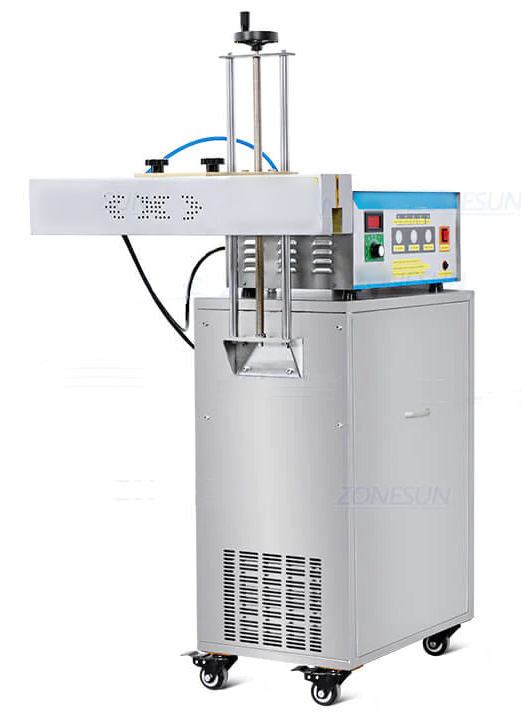
Automatic inline induction foil sealing machine
A practical Lancing specification for high-quality aluminium foil liner sealing on production lines.
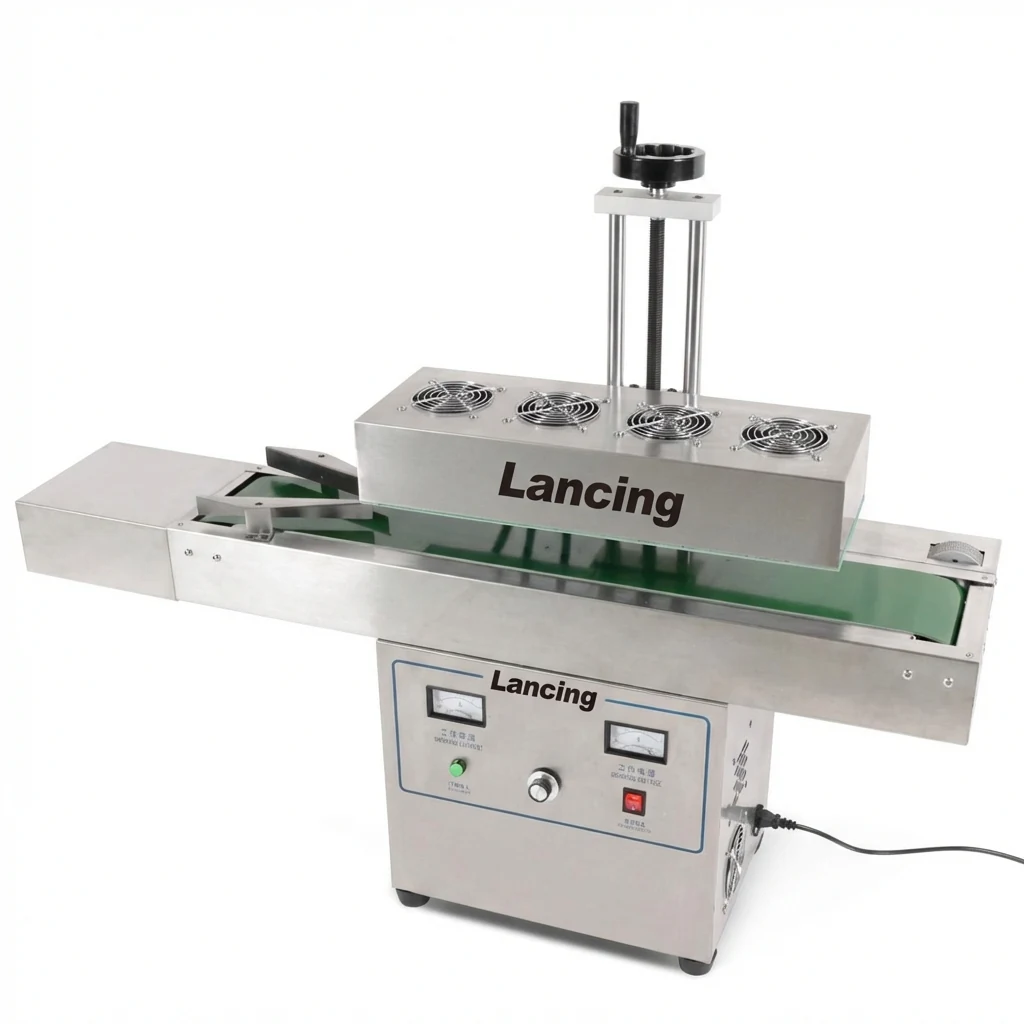
Automatic induction foil sealer
Stainless construction, adjustable stand and induction head/controller for inline sealing.
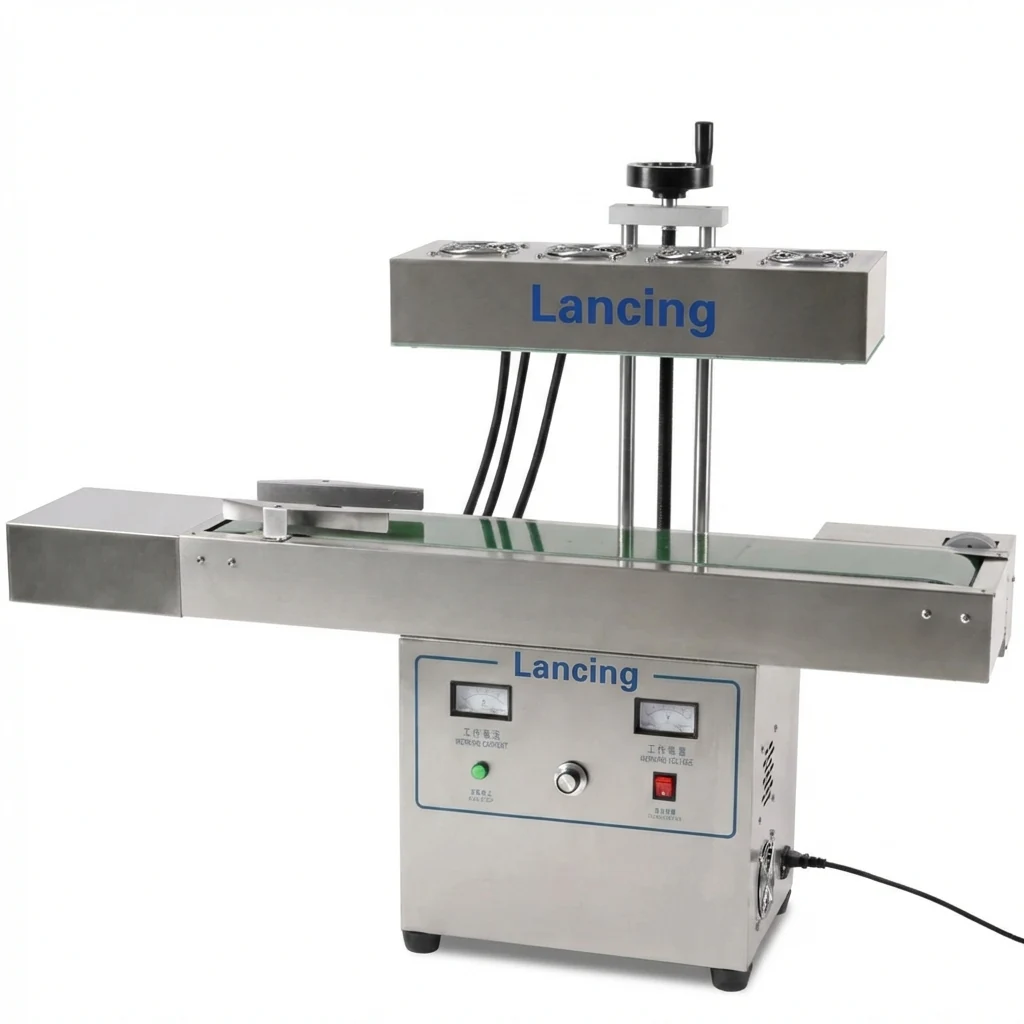
Applications
Use on bottles, jars and compatible plastic or glass packs with foil-lined caps.
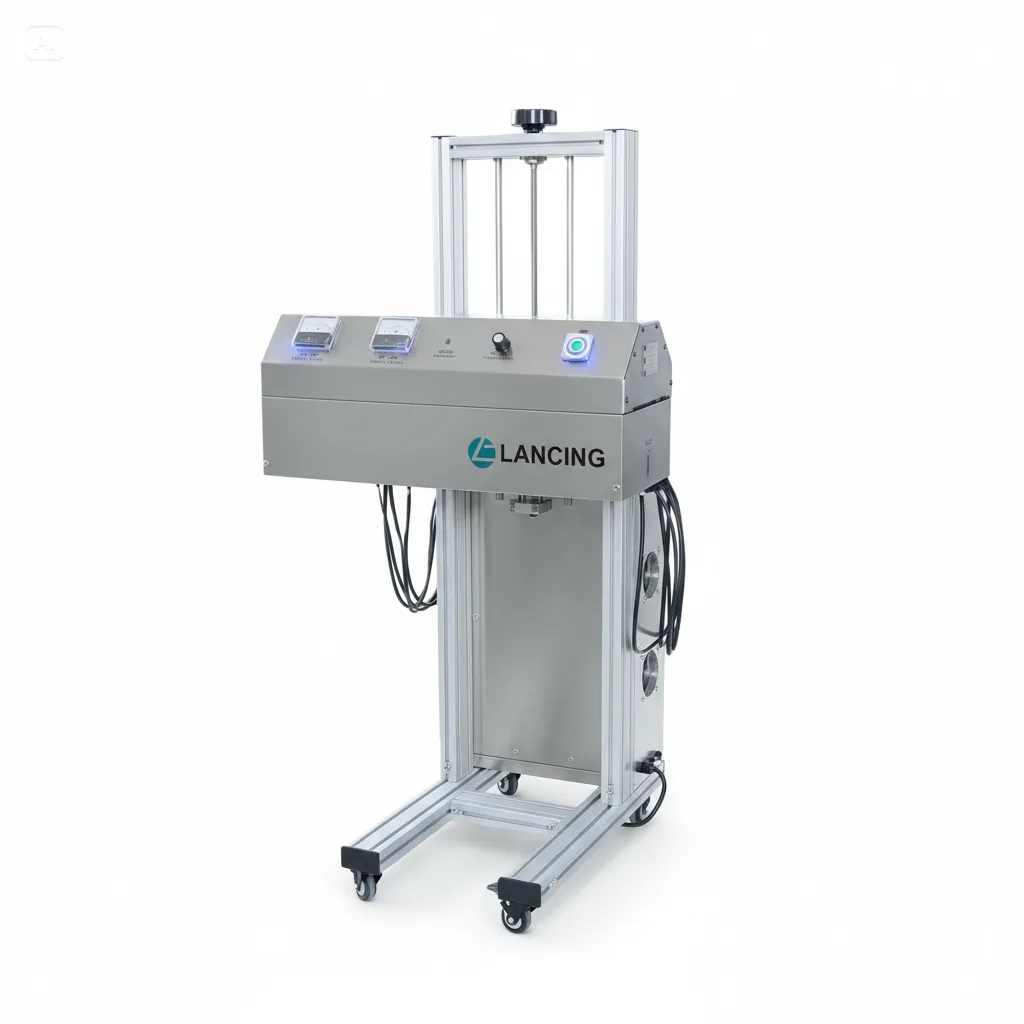
Specification support
Confirm liner type, cap diameter, container height, conveyor height, speed and utilities before quotation.
Lancing induction sealer machine views
Additional supplied machine images have been added so visitors can see the conveyor, sealing head, control panel and floor-standing induction sealing options.
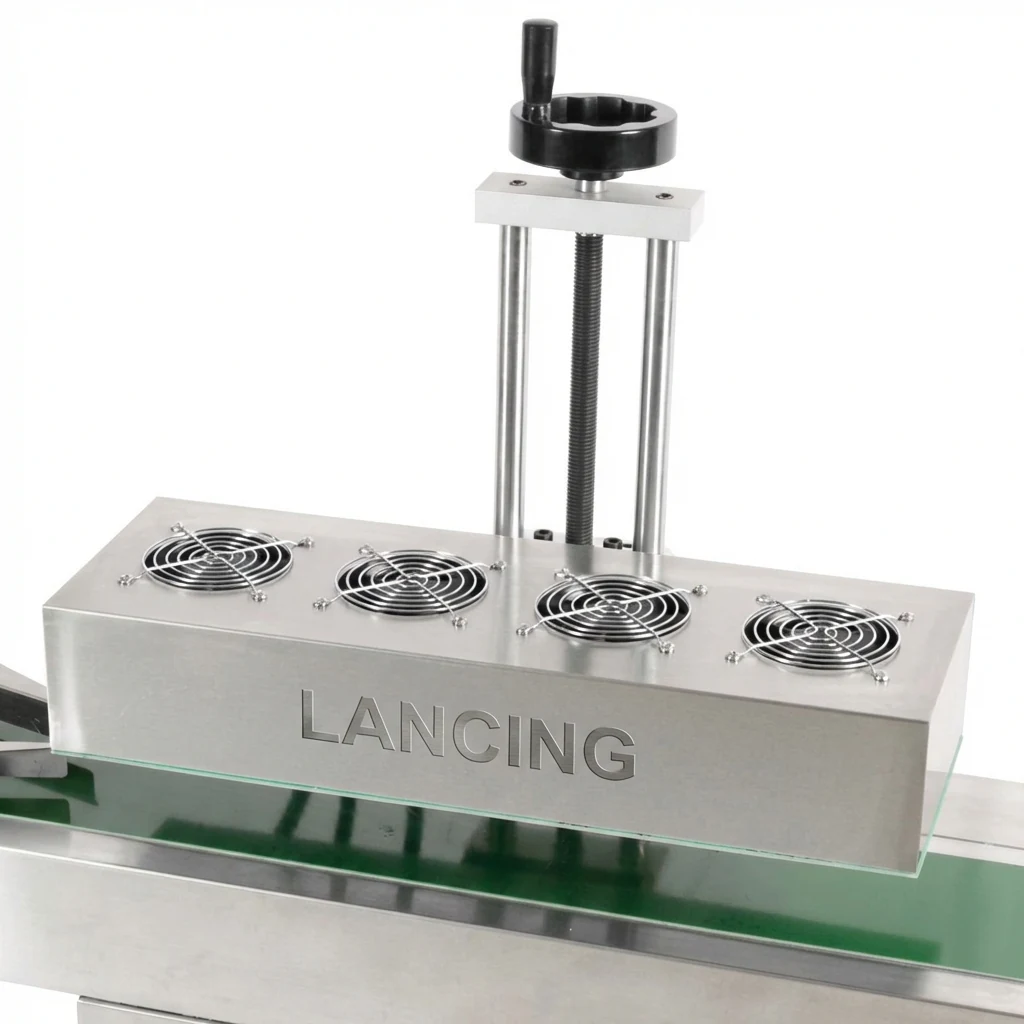
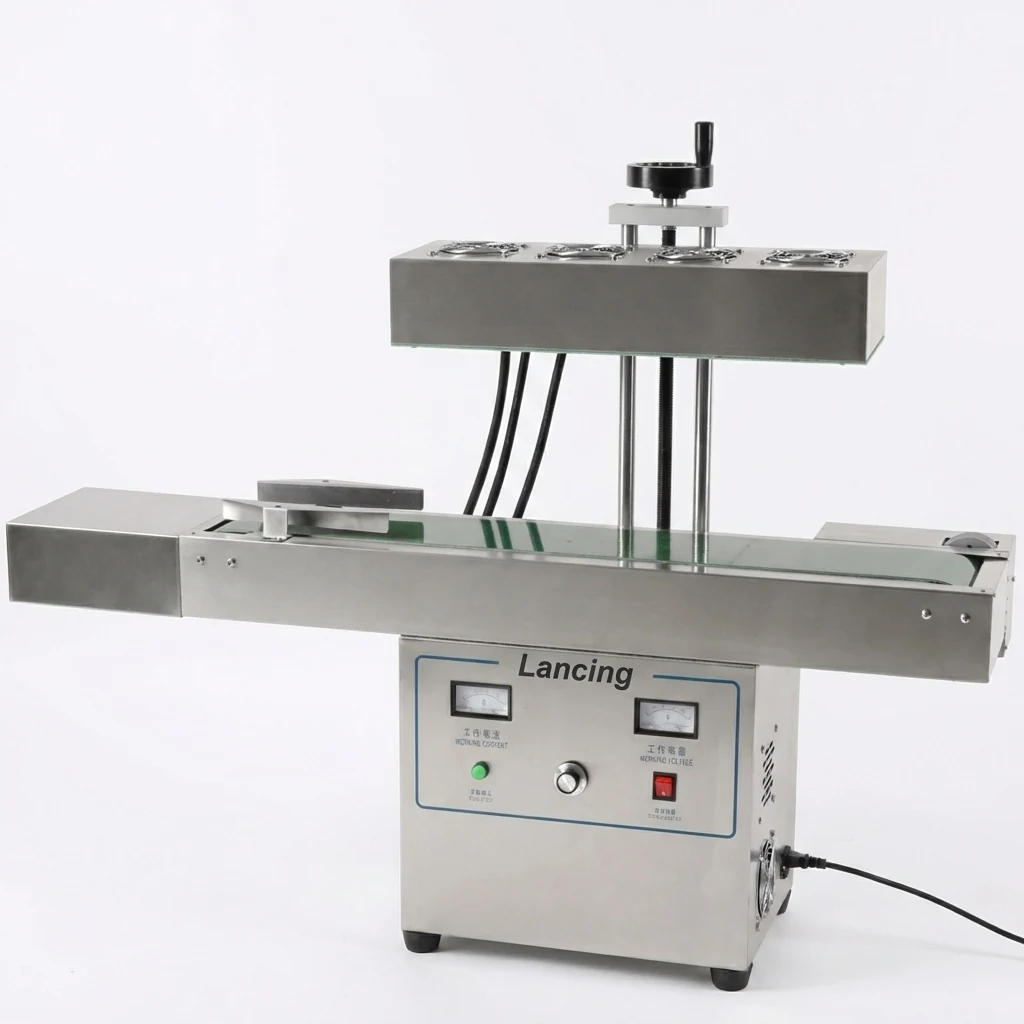
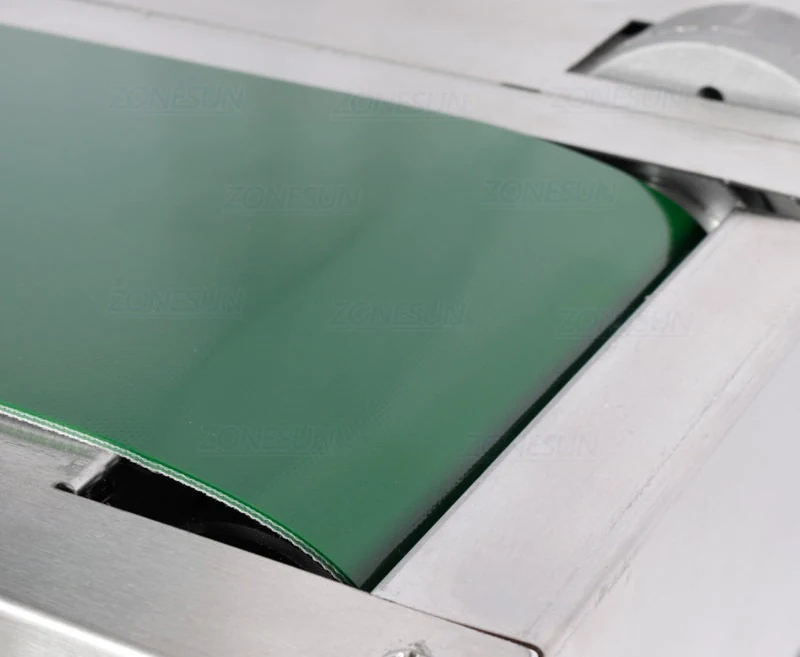
Engineered around cap size, bottle height and line speed.
| Power supply | 220 V, 50 Hz, approximately 4.2 kW on the reference unit |
|---|---|
| Sealing diameter | Typical head ranges include 15–60 mm, 20–70 mm, 35–85 mm, 50–120 mm and 60–130 mm |
| Sealing speed | 0–260 bottles per minute, subject to bottle, cap, liner and conveyor conditions |
| Bottle height | Approx. 10–300 mm based on a 900 mm conveyor height, model dependent |
| Machine size | Approx. 700 × 690 × 1450 mm, model dependent |
Built for buyers who need a reliable seal, not just a machine.
Choose the equipment around the real operating variables: cap diameter, liner material, bottle material, closure torque, conveyor speed and production environment.
Food & beverage
Foil seals for jars, bottles, sauces, drinks, powders and dry ingredients where freshness and leakage control matter.
Cosmetic & personal care
Clean tamper-evident seals for creams, lotions, oils and other consumer products.
Chemical & technical products
Suitable route for compatible bottles where the liner, cap and container have been checked for induction sealing.
See the induction sealing process in motion.
The supplied video has been built into the website hero and this video section, giving visitors a clear view of induction sealing equipment rather than relying on static brochure copy.
- Demonstrates inline packaging integration
- Supports visual product understanding
- Shows the conveyor and sealing-head arrangement
Induction sealer buying guides
Commercial and technical content written for buyers comparing foil sealing equipment.
Need an induction sealer for a packaging line?
Send your cap size, bottle or jar height, liner type, required throughput and conveyor details. Lancing UK can confirm the best configuration.
Specify an induction sealer around the seal, not only the machine.
The strongest enquiries define the cap, liner, container and production conditions before choosing the sealing head. These checks help narrow the machine range and reduce trial-and-error during commissioning.
Cap, liner and neck finish
Induction sealing depends on a compatible foil liner, enough contact pressure from the cap and a clean, even container mouth. The same machine can behave differently if the liner grade, cap torque or neck finish changes.
Power, speed and dwell time
The quoted diameter range and speed are model-dependent. The practical sealing window is confirmed by sample testing at the intended conveyor speed, bottle spacing, cap size and liner construction.
Line integration ownership
The sealer normally sits after capping and before downstream packing. A stable upstream capper, suitable conveyor hand-off and agreed reject or foil-detection method all affect final seal quality.
What the inline induction sealing video shows.
The video shows an inline induction foil sealing machine positioned on a conveyor with the sealing head above the capped container path. In production, the cap holds the foil liner against the mouth of the bottle or jar while the induction field heats the aluminium layer. The heat-seal layer then bonds to the container mouth when the correct combination of power, conveyor speed and dwell time is reached.
Use the video as a layout reference only. Final settings must be proven with your own cap, liner, container material and product conditions. For multi-SKU lines, record a setup sheet for each cap diameter and liner type so operators can return to an established sealing window after changeover.
| Information to supply | Cap outside diameter, neck finish, cap type, liner specification, container material and filled product. |
|---|---|
| Line details | Current conveyor width and height, target containers per minute, bottle spacing and the position after capping. |
| Validation checks | Peel checks, leak checks and retained samples from the intended cap torque and speed range. |
Turn an induction sealer enquiry into a proven sealing window.
The practical output of an induction foil sealing machine is set by the pack, not by the machine name alone. Use these checks to move from a broad induction sealer enquiry to a repeatable setting for the cap, foil liner, bottle or jar and conveyor.
Define the pack group
Group products by cap outside diameter, liner construction, container material and bottle height. Packs that look similar can need different power, conveyor-speed or head-height settings if the foil liner or neck finish changes.
Prove the setting window
Record accepted and rejected power/speed combinations rather than relying on a single trial. A useful setup sheet captures the cap, liner, conveyor speed, head height, cooling time and the result of peel or leak checks.
Keep line ownership clear
The induction sealer relies on stable upstream capping and a controlled conveyor hand-off. Capping, complete-line layout and wider packaging automation should remain owned by the most relevant Lancing route, with this site focused on foil seal quality.
Match the induction sealer to output, operator involvement and line control.
An inline automatic sealer is one route within a wider selection. Start with the way capped packs move through production, then check the cap, liner and container system.
Continuous inline induction sealers
For conveyor-based production after capping, with controlled head height, dwell time and bottle spacing.
Automatic induction sealers
Compare continuous bottle and jar sealing around cap range, line speed, controls and validation.
Air-cooled induction sealers
Understand installation, ventilation, duty and why cooling architecture is only one part of the selection.
Research the pack, process and project before requesting a quotation.
These resources address the questions that most often change machine selection, line scope and seal acceptance.
What changes the project cost?
Separate the core sealer from conveyors, inspection, rejection, controls, trials and installation.
Which foil liner construction?
Compare one-piece and two-piece liners, reseal backing and the evidence needed from the liner supplier.
Which container materials?
Check PET, HDPE, PP and glass packs against the correct heat-seal layer and neck-finish condition.
What must the site prepare?
Plan power, conveyor space, line interfaces, access, samples and commissioning ownership.
How is repeatability maintained?
Use start-up checks, filter and cooling inspections, changeover records and safe maintenance routines.
Common buyer questions
Answers on materials, caps, line position, speed, foil detection, trials and quotation information.
Define what must be true before the machine is accepted.
A qualified induction sealer enquiry states the packaging components, expected line behaviour and evidence that will be used to approve the finished seal. This turns a broad equipment request into an engineering brief.
For wider cap application, conveyor and complete-line requirements, use the relevant Lancing resources rather than expecting the sealing head to correct another process stage.
| Pack | Cap, liner, container material, neck finish, product, bottle height and production samples. |
|---|---|
| Process | Capping method, target and normal speed, bottle spacing, conveyor dimensions, head position and changeover groups. |
| Quality | Visual seal, peel behaviour, leak method, foil presence, reject verification and retained-sample requirements. |
| Project | Utilities, controls, drawings, FAT, installation, training, documentation and aftercare boundary. |
Common questions before specifying an induction sealer
What should be confirmed before an induction sealer is selected?
Confirm the complete packaging system before selecting an induction sealer: the container material and neck finish, cap construction, foil liner specification, cap application method, normal and maximum line speed, bottle height and the checks used to accept a finished seal. These details determine whether the proposed head and machine can create a repeatable sealing window. The induction sealer buying guide turns that information into a practical selection sequence.
Can cap diameter alone determine the correct induction sealer?
No. Cap diameter is an important starting point, but it does not define the complete application. The distance between the top of the closure and the foil, cap profile, liner construction, container mouth, head height and production speed all affect how efficiently energy reaches the foil. Use the sealing-head selection guide to identify the evidence needed alongside the diameter.
Does induction sealing make a pack tamper-proof?
Induction sealing is normally used to provide visible tamper evidence, not an absolute claim that a pack is tamper-proof. The foil can show that the container has been opened or disturbed, but performance also depends on the closure, liner, container and the way the consumer is expected to remove the seal. Define the intended opening evidence and verify it on production samples using the tamper-evident packaging guidance.
When should production samples be tested?
Test representative samples before the machine specification is finalised and again when the installed line is commissioned. Use the intended cap, liner, container, product or representative fill, capping method and speed range. Repeat the trial after a material, supplier or geometry change that can affect the seal. A structured seal-validation plan helps separate an acceptable operating window from a single successful sample.
Move from a search for an induction sealer to a provable production setting.
An induction sealer should be selected around the cap, foil liner, container mouth and line conditions, not only around a machine name. The fastest route to a reliable quotation is to supply the smallest and largest closure, the liner construction, the container material, the expected line speed and any existing conveyor or capper constraints. Those inputs allow Lancing to check whether the project needs a standard inline sealer, additional head options, trial evidence, reject handling or a more detailed acceptance plan.
Use the resources below when the search has moved beyond basic product discovery and into engineering proof. They help buyers compare quoted systems, prepare samples and understand why power, speed, dwell time and cap pressure must be recorded together.
| Question to answer | Best next step |
|---|---|
| Will the pack seal? | Check cap, liner, material and neck finish before relying on a machine speed figure. |
| Can the line run it repeatedly? | Confirm conveyor stability, bottle spacing, head height, controls and any foil-detection requirement. |
| How should it be signed off? | Agree sample-trial, FAT/SAT and retained-sample evidence before the final quotation scope is fixed. |
Cap and liner trial plan
Prepare samples and trial notes before confirming the sealing window.
Speed and dwell time
Understand how conveyor speed, power and head height interact.
FAT and SAT acceptance
Define what should be proven before and after installation.
Food-contact checks
Clarify packaging-material responsibilities for food and drink packs.
More ways to specify a reliable induction sealing process.
These resources cover sealing-head type, missing-foil detection, transit leakage and chemical-product checks. They focus on the cap, foil liner, container and line conditions.
Flat vs tunnel heads
Compare head styles for cap geometry, foil position and format range.
Detection and rejects
Plan missing-foil, high-cap, jam and reject responses around the sealer.
Transit leak control
Test the finished pack for courier, ecommerce and distribution risk.
Chemical-product checks
Review SDS, DSEAR, vapour/dust risk and liner compatibility before quoting.
What should an induction cap sealing trial establish?
Test the actual bottle or jar, closure and liner combination after the intended capping operation. Define the required seal result and how it will be inspected. Compare the proposed sealer’s setup across pack sizes and line conditions, including starts, stops and challenge packs with known sealing faults.
Related guidance:
Make the bottle, cap and liner one controlled specification
An induction sealing enquiry should identify the complete pack combination. Record the bottle or jar supplier reference, closure reference and foil liner code together. State whether the liner is already supplied inside the cap and identify any material or supplier changes being considered. This gives a proposed sealing trial a defined starting point.
Before comparing machinery, ask the packaging team to describe the seal result required for release. Include the appearance before opening, the intended opening behaviour and the agreed checks after the pack has cooled and reached the relevant handling condition. Keep these requirements separate from the machine settings used to produce the trial samples.
For a range of packs, create individual trial entries rather than assuming that a common cap diameter establishes a common setup. Include the container material, mouth design, liner and closure combination for each entry. Ask the machinery proposal to identify the demonstrated formats and any formats that still require material or process confirmation.
- Traceable samples
- Label trial packs with component references, date and the relevant setup record so results can be traced back to the actual materials.
- Shared responsibilities
- Clarify who confirms liner suitability, who sets the closure requirements and who approves the finished seal for the product.
- Integrated operation
- Show the capper, conveyor and downstream handling so the proposal addresses normal running, interruptions and the agreed restart process.
Can a successful trial approve a different liner from another supplier?
Treat a new liner as a change requiring review. Provide the new specification and request the checks needed to establish compatibility and sealing performance for the complete pack; appearance or diameter alone is not enough.