How do you choose the right induction sealing head?
Choose the induction sealing head from the closure and foil geometry, the container path and the range of packs that must run—not from cap diameter or machine power in isolation.
The head must place a suitable induction field at the foil liner.
The correct induction sealing head is selected from the cap outside diameter, closure profile, location of the foil inside the cap, container height, conveyor presentation and the complete format range. A nominal diameter only describes one part of the application. The proposed head must deliver usable energy to the liner while allowing each capped container to pass beneath it in a stable, repeatable position.
For a Lancing enquiry, send representative caps, liners and containers rather than relying only on a drawing. A sample trial can show whether the field is distributed evenly across the foil and whether one head can cover all required formats without an impractical compromise.
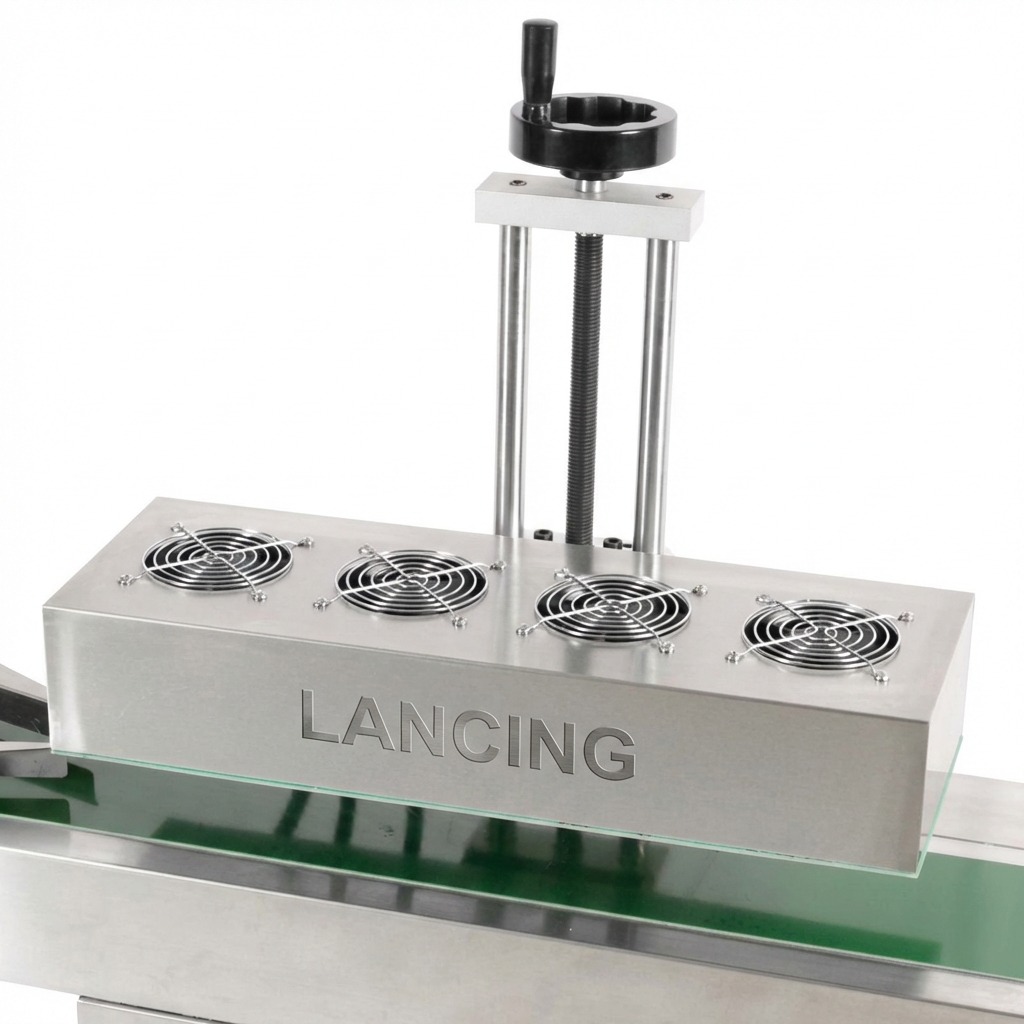
Record the variables that determine field position and coverage.
Use the following information to compare the pack range before a head is specified.
| Cap outside diameter | Defines the approximate foil area and the starting head range, but not the complete field requirement. |
|---|---|
| Closure profile | Shows whether the top is flat, raised, stepped, dispensing-style or otherwise shaped in a way that changes the distance to the foil. |
| Foil position | A deeply recessed liner may need a different field arrangement from a liner close to the cap top. |
| Container and cap height | Determines head clearance, machine adjustment and whether every SKU can pass beneath the head safely. |
| Format range | Shows whether one head can cover the required packs or whether a second head or different machine route should be trialled. |
| Line conditions | Conveyor speed, bottle spacing, centring and stability influence exposure and repeatability. |
How to prepare the pack range for a head-selection trial
- Group the packs by cap diameter, closure profile and foil position rather than by product name alone.
- Identify the smallest, largest, tallest and most unusual closure in each group.
- Confirm the liner construction and container material for every sample.
- Apply caps using the intended production method and record the application condition.
- Trial the credible speed and head-height range, then check edge and centre bond after a consistent cooling interval.
- Record accepted and rejected settings so a changeover does not depend on memory.
Questions about induction sealing head selection
Is cap outside diameter enough to select the head?
No. Diameter identifies the approximate size of the liner, but the field also has to reach the foil at the right depth and through the actual closure shape. Supply a section drawing or physical cap where possible, especially for child-resistant, dispensing, raised-top or deeply recessed closures.
Can one sealing head cover several cap sizes?
It may cover a defined range, provided every pack within that range is trialled and has an approved setup. A broad nominal range does not mean every geometry will seal equally well. Widely separated cap sizes can justify a second head when one compromise setting would reduce repeatability or changeover control.
Does cap height or recessed foil position matter?
Yes. The effective field reduces as the working distance and closure geometry move the foil away from the intended field position. Record the distance from the cap top to the foil and the working gap beneath the head. Do not try to overcome a poor field relationship only by increasing power.
How should wide-mouth jars be checked?
Check the bond around the complete circumference, not only at the centre or one peel point. A wider foil area can expose uneven field distribution, rim flatness or cap-pressure variation. Use representative jars and the intended cap in a trial, then inspect edge continuity and leak performance.
When is a second sealing head justified?
A second head is justified when separate format groups need materially different field geometry or when changeover risk is lower with a dedicated setup. The decision should be based on trial evidence, output and changeover frequency rather than the desire to claim the widest possible range with one head.
Related induction sealing guidance
Send the caps and liners that define your format range.
Lancing can review the closure geometry and identify which samples should be trialled before a head is specified.
Check whether the application needs a flat, tunnel or dedicated head route.
Cap outside diameter is only the starting point. UK buyers also compare head style when the closure is raised, spouted, child-resistant, wide-mouth, deeply recessed or difficult to present consistently under the induction field. The new comparison guide explains the decision without assuming that one head type is automatically superior.